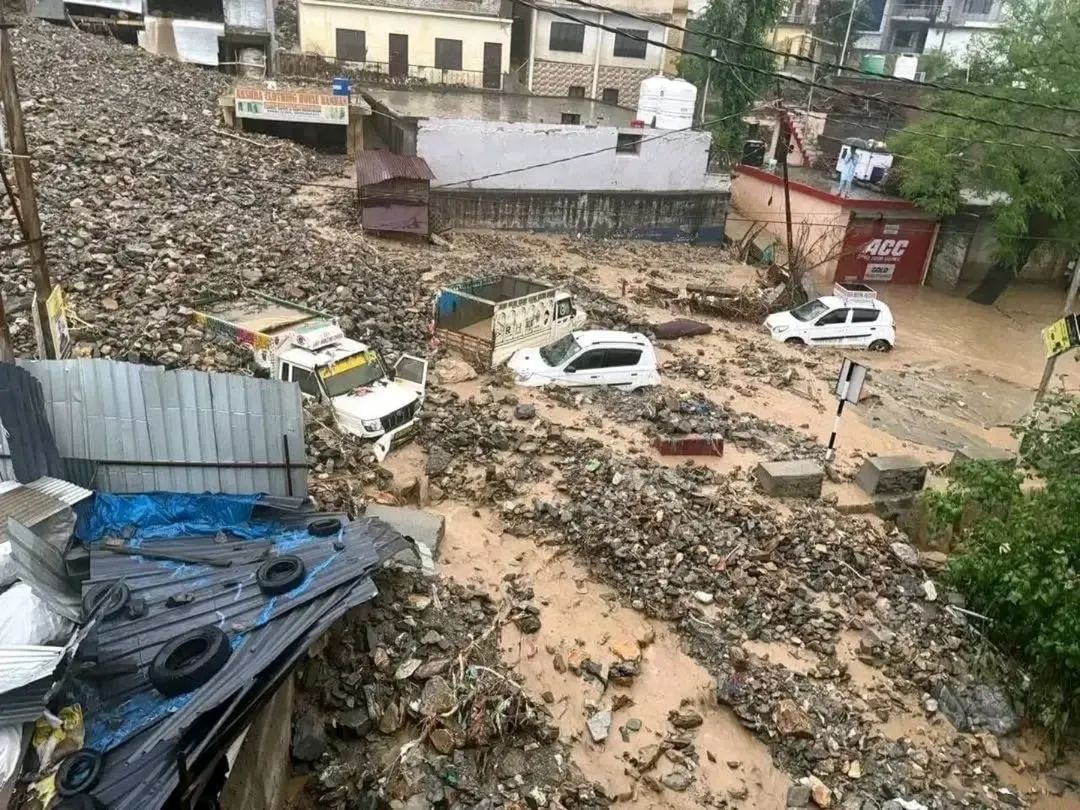
Heartbreaking Scenes from Ramban: RAMBAN: In one of the most devastating weather events to hit Jammu and Kashmir this year, relentless rains, landslides, and flash floods have brought life to a standstill in Ramban district, killing at least three people, damaging dozens of homes, and leaving vital stretches of the Jammu-Srinagar National Highway in ruins.
26-Year-Old Man Dies After Tavera Car Hits Motorcycle in Pattan.
Rescue teams continue to battle perilous conditions on the ground after a cloudburst in the upper reaches of Bhaga village triggered a catastrophic flash flood early Sunday. Officials confirmed that two teenage brothers, Aaqib Ahmed (14) and Saqib Ahmed (12), sons of Mohammad Haneef, died when their home collapsed under the weight of debris. In a nearby house, Mohammad Munir was suffocated to death after getting buried. His body has since been recovered. All the three deaths were reporte from Bhaga vilage.
The Dharamkund area, closer to the Chenab Bridge, was also severely hit. A massive wall of water swept down a local nallah, ravaging the village of Seri Bagna. Though over 90 people were rescued in time through a swift intervention by police and disaster response teams, more than ten houses were flattened, and dozens more were partially damaged. Eyewitnesses described the destruction as sudden and ferocious—“like the mountain came alive,” said one survivor.
The cloudburst triggered a chain reaction of natural disasters across the Ramban district. Torrential rains over 24 hours have caused massive soil erosion, and nearly a dozen major landslides have blocked or destroyed sections of the Jammu-Srinagar National Highway, especially between Banihal and Ramban, the most slide-prone stretch of the route.
Authorities confirmed that around 12 landslide-hit spots have rendered the highway unusable, five of them severely. At Marog, a section of the highway has been washed away by floods, leaving vehicles hanging precariously on its broken edge. A temporary approach road connecting the twin tunnels at Pantiyal was completely swept away. Ironically, this same patch had been destroyed and rebuilt following floods two years ago.At various other points, mudslides and rockfalls have buried parts of the road and dozens of vehicles. At least 12 trucks and oil tankers—most of them parked during the downpour—were found buried under mounds of debris. Fortunately, no loss of life was reported at these sites.
“The damage is extensive. The road will not open today,” an official said, confirming that clearance work has begun but will take time due to unstable terrain and continued rain. Dozens of trucks and some passenger buses are stranded, and restoration crews are working around the clock.
The flash floods also struck Daramkund on the Ramban-Gool road, washing away parts of the settlement. Although a cluster of homes was damaged, local police and public volunteers saved all lives through quick rescue work. The village, however, lost a significant number of livestock.
Elsewhere in the district, Bowli Nallah turned into a cauldron of disaster. A massive mudslide damaged at least a dozen shops, and floodwaters inundated a key market and surrounding residential areas. Videos circulating on social media show heart-wrenching scenes—homes collapsing into the floodwaters, livestock being swept away, and residents crying for help.
Union Minister and Member of Parliament Dr Jitendra Singh expressed sorrow over the deaths and widespread damage. “The highway is blocked and conditions remain dangerous,” he said, lauding the efforts of the district administration led by Deputy Commissioner Baseer-ul-Haq Chaudhary and promising full support to affected families.
Emergency shelters have been opened for the displaced, and relief supplies are being distributed. A high-level damage assessment team has also been deployed.
Meanwhile, the India Meteorological Department has forecast continued rainfall for the next 48 hours, raising fears of further landslides and flash floods.
The Ramban stretch of the highway has long been its Achilles’ heel. While much of the Jammu-Srinagar highway has been rebuilt into a modern expressway—cutting travel time to under four hours in fair weather—the Banihal-Ramban patch remains a crumbling bottleneck, vulnerable to both geological and climatic threats.
Despite periodic reconstruction efforts, fragile slopes, shooting stones, and river floods continue to wreak havoc here. As the highway remains choked yet again, this disaster has underscored the urgent need for a long-term structural solution to make this critical lifeline safer and more resilient.kashmir life.